
Struggling to pick a safety vest? The market is full of options at different prices. Choosing the wrong one wastes money and can seriously compromise your team's safety.
To choose the right reflective vest, you need to check four key things. Look at the fabric type and weight, the brightness level of the reflective tape, the quality of the stitching and details, and finally, ask the seller for a compliance test report.
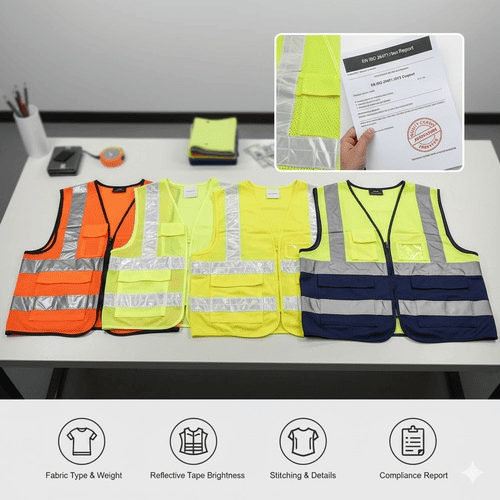
Choosing a vest seems simple, but these details make all the difference between a vest that just looks the part and one that actually keeps you safe. I've spent years in this business, and I've seen firsthand how a small detail can have a huge impact. It’s about more than just fulfilling a requirement; it's about genuine protection. Let's break down what you really need to look for, so you can make a choice with confidence.
Does the Fabric Really Make a Difference?
Wearing a bulky vest in the summer heat is miserable. It makes you want to take it off, even when you know you shouldn't. Choosing the right fabric makes it comfortable.
Yes, fabric is critical for both comfort and compliance. Mesh fabric is breathable and perfect for hot weather, while knitted fabric is better for cooler seasons. To meet safety standards, the fabric should weigh at least 120 grams per square meter (g/m²).
I remember talking to a foreman on a road crew in Arizona. He told me his team used to hate wearing their vests in July. They were made of a thick, solid polyester that trapped all the heat. Productivity dropped, and he was constantly worried someone would suffer from heat exhaustion. We switched them to vests made from a 120g/m² mesh fabric. The change was immediate. The mesh material allows air to circulate, keeping the workers much cooler. They felt better, worked safer, and stopped complaining about the gear.
The fabric you choose should depend on your environment.
Fabric Type and Weight
Your first decision is between mesh and standard knitted fabric. The weight of that fabric is just as important. The industry standard for high-visibility clothing is typically 120 g/m². Cheaper vests often use a lighter fabric, like 80 g/m², to cut costs. This not only feels flimsy but it also might not meet the durability or colorfastness requirements of safety standards like ANSI/ISEA 107.
Here's a simple breakdown:
| Fabric Feature | Standard Compliant Vest | Low-Cost Alternative |
|---|---|---|
| Material Type | Mesh for warm weather, Knitted for cool weather. | Often one-size-fits-all, non-breathable knitted. |
| Fabric Weight | 120 g/m² or higher. | 80 g/m² - 100 g/m². |
| Durability | Strong, withstands worksite wear and tear. | Tears easily, less durable. |
| Comfort | Breathable (mesh) or provides some insulation. | Can be hot, stuffy, and uncomfortable. |
Always ask for the fabric specifications. It’s a simple question that tells you a lot about the vest's overall quality.
Are All Reflective Tapes Created Equal?
You buy a vest so you can be seen, especially at night. But if the reflective tape is poor quality, it won't shine back, making you nearly invisible to drivers.
No, they are very different. Compliant safety vests must use "high-brightness" reflective tape. Many low-cost vests use "normal-brightness" tape to save money. This drastically reduces visibility and fails to meet safety standards, putting you at serious risk in low-light conditions.
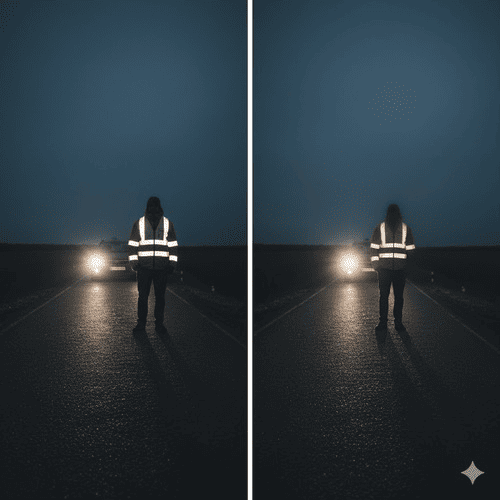
I have a simple test I show to new purchasing managers. I take them into a dark room with two vests that look identical in the light. One has high-brightness tape, and the other has the cheap, normal-brightness kind. I stand 50 feet away and shine a flashlight. The high-brightness vest lights up like a beacon, impossible to miss. The other one? You can barely see a faint glow. The difference is shocking. That’s the difference between a car seeing you and a potential accident. The entire purpose of the vest lies in the quality of that tape.
Understanding Brightness Levels
The magic of a safety vest is in the retro-reflective material. It contains tiny glass beads or micro-prisms that bounce light directly back to its source. The quality of this material determines its brightness.
There are generally three unofficial grades you'll encounter:
- 普亮 (Pǔ Liàng) / Normal-Brightness: This is the lowest grade. It offers minimal reflectivity and is not compliant with safety standards. It's often found on the cheapest vests.
- 高亮 (Gāo Liàng) / High-Brightness: This is the standard for compliant safety vests. It provides excellent visibility that meets EN ISO 20471 and ANSI/ISEA 107 requirements.
- 亮银 (Liàng Yín) / Bright-Silver: This is a premium-grade tape, offering even greater reflectivity, often exceeding standard requirements.
Here is how they stack up:
| Tape Grade | Brightness Level | Safety Compliance | Common Use |
|---|---|---|---|
| Normal-Brightness | Low | No | Very low-cost, non-workplace items. |
| High-Brightness | High | Yes | Standard for EN 20471 & ANSI 107. |
| Bright-Silver | Very High | Yes (Exceeds) | Premium workwear, emergency services. |
When buying a vest, never settle for "normal" brightness. Always insist on "high-brightness" tape to ensure you are actually protected.
What Small Details Reveal a High-Quality Vest?
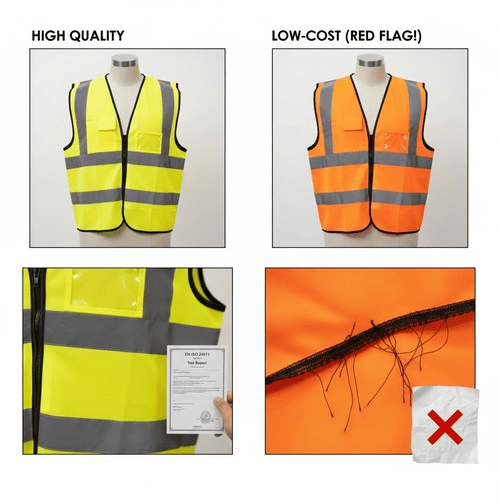
You see two vests that look the same, but one costs half as much. This is a red flag. The cheaper vest likely cut corners you can't immediately see.
Look closely at the workmanship. A high-quality vest has neat, even stitching with no loose threads. The black or colored edging, called binding, should be sewn on smoothly. Also, a reputable manufacturer will always provide a compliance certificate or test report.
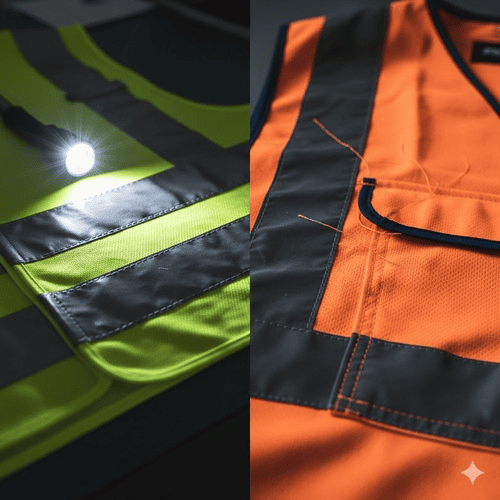
It’s like buying any other piece of clothing. You can just feel the quality. The first thing I do when I inspect a new sample is turn it inside out. I look at the seams. Are they straight? Are there loose threads hanging everywhere? I run my finger along the binding. Is it secure and uniform, or is it wavy and poorly attached? These little things tell a big story. A factory that pays attention to neat stitching is a factory that pays attention to all the other important details, like using standard-compliant fabric and tape.
Checking for Quality and Compliance
You don't need to be an expert to spot good or bad quality. Use your eyes and your hands.
Key Quality Indicators:
- Stitching: Look for clean, straight stitch lines. Pull gently on the seams; they should feel strong and secure. Lots of loose threads is a sign of rushed, low-quality production.
- Binding: The fabric edge trim should be neatly folded and sewn. Poorly attached binding is often the first thing to fray and come apart.
- Zippers/Velcro: Test the closures. They should operate smoothly and feel durable. A cheap, flimsy zipper will break quickly.
The Ultimate Test: The Report Beyond physical inspection, the easiest way to verify quality is to ask for documentation. Reputable manufacturers who meet international standards will gladly provide it.
| Document | What It Proves | Why It's Important |
|---|---|---|
| Test Report | The vest model has passed laboratory testing for things like color, luminosity, and durability. | This is your proof that the vest meets the safety claims, like EN ISO 20471 or ANSI/ISEA 107. |
| Declaration of Conformity | The manufacturer officially declares the product complies with specific standards. | It's a legally binding document that shows the manufacturer stands behind their product's safety rating. |
If a seller hesitates or can't provide a test report for their vest, it's a major warning sign. It usually means the product has not been tested and likely does not meet safety standards.
Conclusion
Choosing the right reflective vest is about checking the fabric, tape, workmanship, and asking for a test report. This ensures you get a compliant, safe, and durable product.